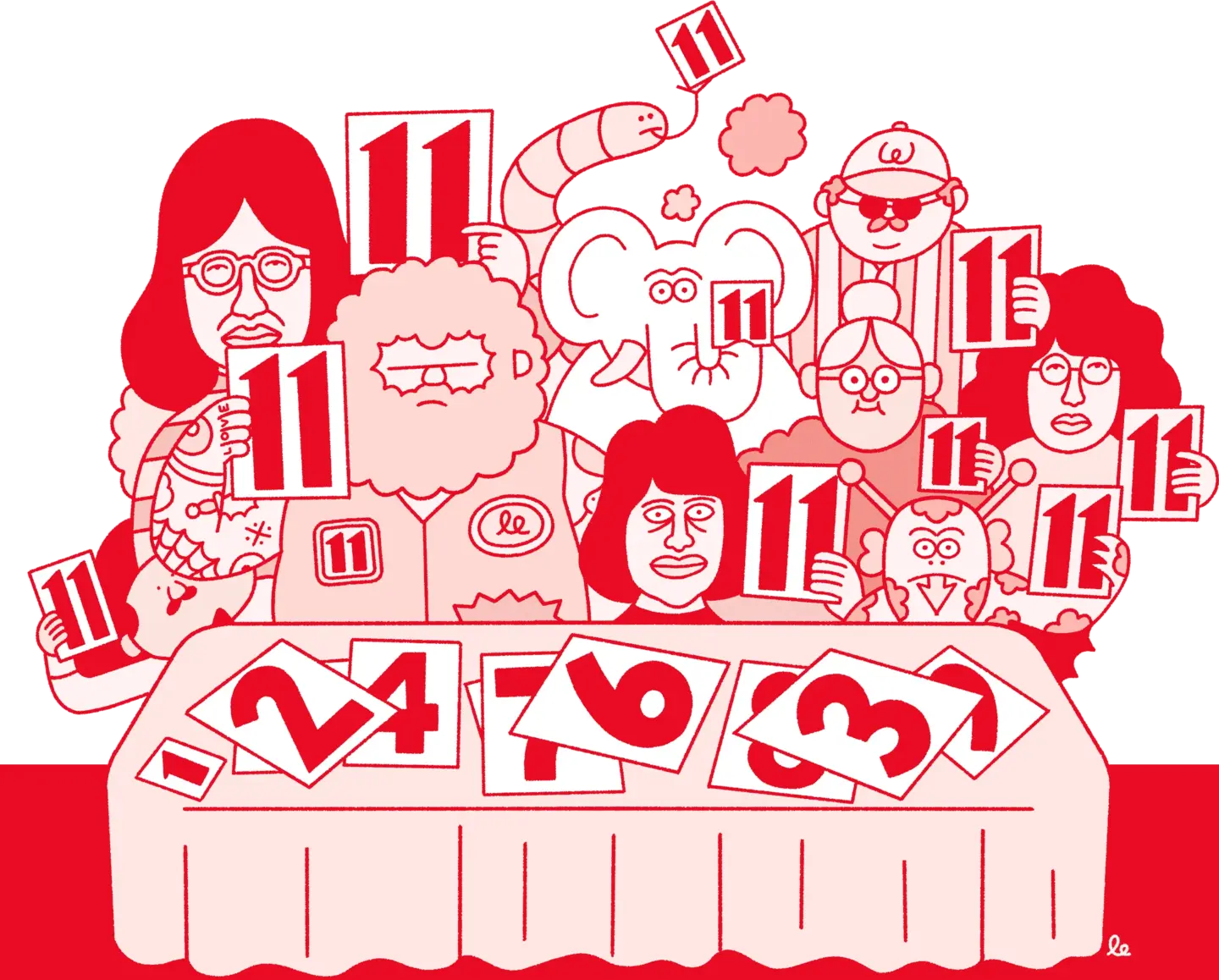
Hello, world!
It’s been a while since I sat behind the wheel of a fresh new website.
The last first blog post I wrote was in 2014 shortly after starting Good Work, the web development agency that I started and ran for over 10 years. Before that was Erskine Design and before that was a web design company I started in college. If you add it all together I’ve spent 18 long years in digital client services.
With my last business, Good Work, I followed the classic maker-to-business-owner trajectory—doing what I loved (making things), then gradually delegating my work to others until, before I knew it, I wasn’t making anything at all!
I spent most of 2024 thinking through my purpose and what I should do next. I considered everything from operations consulting for digital service businesses to riding the silver tsunami and purchasing a 20-30 year old blue collar business. Every few months I came to my wife with a new idea for our future, and she somehow patiently cheered on each one of them. I got pretty far into a few ideas before realizing that I couldn’t see myself doing any of it! Back to the drawing board…
One day I was speaking to Phil about this conundrum and through conversation, I remembered an old known that I had lost sight of: I was born to make stuff on the internet. After about five seconds of back and forth it became incredibly clear that the next step was to start the last business I’ll ever work at; a little software studio called Better Than Good.
Looking back, the best moments of my career were when I was deep in the details: designing, coding, and creating. And that’s what Better than good is all about—meticulously creating software that is fast, simple, and a joy to use.
Our first app will launch sometime this summer, available on the web, iOS, and Mac. I’ll be sharing the journey on this blog along the way.
Wondering if we’re a fit for your project? Ask your AI. It’ll read up on us, ask you a few questions and start the conversation.
More from the blog
-
Chaos or death
> AI has made disorder cheap to create. Order still costs leadership attention and decisions, and most firms buy only the tools.I spend a lot of time in other people's messes. That is, more or less, my job. A company calls because its technology initiative has stalled, and I always find the same scene, just in a different company. Everyone agreed on a strategy deck, and nobody followed it. Staff are using AI tools the business never chose, and Harmonic Security [tracked 665 of them](https://www.harmonic.security/resources/what-22-million-enterprise-ai-prompts-reveal-about-shadow-ai-in-2025) a…
-

Workslop: worse but more
In November 1955, a naval historian named C. Northcote Parkinson opened [a satirical essay in The Economist](https://en.wikipedia.org/wiki/Parkinson%27s_law) with a line that outlasted everything else he wrote. Work expands to fill the time available for its completion. His example was an elderly lady who spent an entire day posting a single card to her niece, a task a busy person would finish in three minutes on the way to lunch.Parkinson’s law now has a sequel, and it is worse. Work no longer expands to fill the time. It expands to fill the capacity. The effort of producing a thing used to …
-

Foomers vs doomers: skilled incompetence and the AI tug of war
foom-er, noun, an ironic malapropism playing on doomerism (AGI fatalists) and FOMO (hustle bros), used to describe techno-optimists. Reflects the onomatopoeic "slowly, then all at once" nature of exponential growth: “AI go foom.”A speaker at one of the many AI conferences that have sprung up like garments on your "clothes chair" (not clean, but not dirty enough to wash) describes the miracles of agent-assisted coding. Year-long rewrites finished in a fortnight, backlogs cleared, and hard problems dissolved by brilliant prompting and clever code harnesses. The audience of true believers laps i…
-

Forward Deployed Engineers: AI’s hired guns
> The last mile of AI deployment is a real person, sitting in your office, learning your business, writing your plumbing, and making things work reliably. That will remain human for the foreseeable future.Google Trends shows a 5,000% increase in searches for "AI forward-deployed engineer" over the past five years. The curve stays flat from 2021 through mid-2024, then turns vertical. [Indeed data reported by Business Insider](https://www.businessinsider.com/ai-forward-deployed-engineer-career-job-openings-tech-2026-5) shows postings for the role rising from 643 in April 2025 to 5,330 a year la…
-
The sorting machine: recruitment’s race to the bottom
> The sorting machine was built to cope with a genuine problem. Where it went wrong was in mistaking efficiency for effectiveness, in assuming that the ability to process resumes fast meant the ability to evaluate candidates well. The fix is not a smarter machine but a more modest one, paired with humans who are given the time, the tools, and the structured information to do what they were always better at.If you've been involved in any part of the recruitment process, the last 18 months have been dispiriting, to say the least. Hiring became a closed loop. Employers adopted applicant tracking…