Weeknotes vol. 17: business, schmizness
Hello and happy casual weeknotes Friday.
I stopped writing these about a year ago when I began the transition into consulting (solving fun and challenging problems), and to say a lot has changed since then would be the understatement of the century.
In summary: Iain joined full time, we’re helping people solve operational problems and optimize their work across pretty much all aspects of business, and we’re having a lot of fun doing it. Iain has his masters in AI for Business, which has pushed me to go down the biggest rabbit hole I’ve been down since HTML/CSS in college (and we know where that led).
What have I been doing, specifically, you ask? Great question.
The answer is mostly ‘Claude’. Figuring out it’s (his?) inner workings and how all of the tools in the Claude toolbox work together and can be used to solve actual business problems.
What I love about Claude is the ability to route prompts through a filesystem of standardized folders, files and instructions using a set of rules and naming conventions, and BOOM, you’ve got an automated process. It’s not coding, it’s just writing text like a robot wants it written (which we’re in luck folks because I’ve been thinking like a robot since the day I was born).
I use Claude Code for this, but it’s not actually code at all. It’s just writing robotic instructions that say go here for this and there for that and branch off for this and use your little (big) Claude brain to figure out the details. Then, out pops the pop-tart!
Figure out how to do that at scale for lots of different cross-departmental things without making the system too complex and unmaintainable and you’re in business (that’s the part I’ve been focusing on).
While the fact that you can ‘just do stuff’ is great, it’s also making the fragmented work problem 100x worse for people who aren’t careful. We all have data all over the place (dozens+ of specialized Saas apps, for instance) and now we’ve got Frankenstiens of all of the above on every employees desktop (Thanks, Obama AI).
The future is figuring out how to normalize all of that data into a structured brain that can help you and your AI agents and skills and all of that jazz do your work together more efficiently and transparently.
What a world to live in!
Like this? Get email updates or grab the RSS feed like it’s 2008.
More from the blog
-

Workslop: worse but more
In November 1955, a naval historian named C. Northcote Parkinson opened [a satirical essay in The Economist](https://en.wikipedia.org/wiki/Parkinson%27s_law) with a line that outlasted everything else he wrote. Work expands to fill the time available for its completion. His example was an elderly lady who spent an entire day posting a single card to her niece, a task a busy person would finish in three minutes on the way to lunch.Parkinson’s law now has a sequel, and it is worse. Work no longer expands to fill the time. It expands to fill the capacity. The effort of producing a thing used to …
-

Foomers vs doomers: skilled incompetence and the AI tug of war
foom-er, noun, an ironic malapropism playing on doomerism (AGI fatalists) and FOMO (hustle bros), used to describe techno-optimists. Reflects the onomatopoeic "slowly, then all at once" nature of exponential growth: “AI go foom.”A speaker at one of the many AI conferences that have sprung up like garments on your "clothes chair" (not clean, but not dirty enough to wash) describes the miracles of agent-assisted coding. Year-long rewrites finished in a fortnight, backlogs cleared, and hard problems dissolved by brilliant prompting and clever code harnesses. The audience of true believers laps i…
-

Forward Deployed Engineers: AI’s hired guns
> The last mile of AI deployment is a real person, sitting in your office, learning your business, writing your plumbing, and making things work reliably. That will remain human for the foreseeable future.Google Trends shows a 5,000% increase in searches for "AI forward-deployed engineer" over the past five years. The curve stays flat from 2021 through mid-2024, then turns vertical. [Indeed data reported by Business Insider](https://www.businessinsider.com/ai-forward-deployed-engineer-career-job-openings-tech-2026-5) shows postings for the role rising from 643 in April 2025 to 5,330 a year la…
-
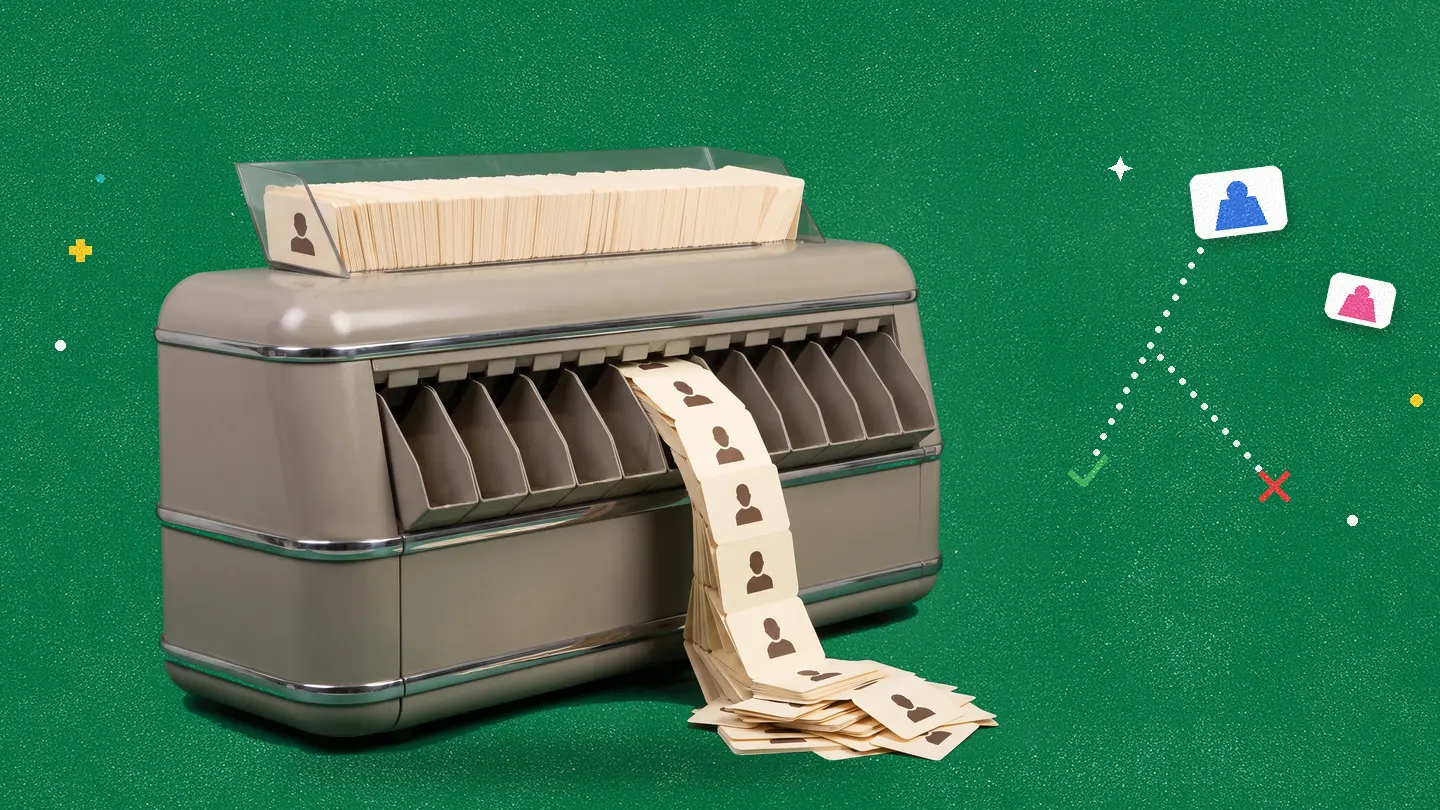
The sorting machine: recruitment’s race to the bottom
> The sorting machine was built to cope with a genuine problem. Where it went wrong was in mistaking efficiency for effectiveness, in assuming that the ability to process resumes fast meant the ability to evaluate candidates well. The fix is not a smarter machine but a more modest one, paired with humans who are given the time, the tools, and the structured information to do what they were always better at.If you've been involved in any part of the recruitment process, the last 18 months have been dispiriting, to say the least. Hiring became a closed loop. Employers adopted applicant tracking…
-

Weighing smoke: why GEO dashboards are mostly useless
> The promise of a tool that gives you similar search visibility to the pre-agent world is understandably seductive. But before you eagerly hand over your cash for a platform, consider whether an afternoon's work a month might be a more cost-effective alternative.I recently wrote about [the GEO chimera](https://betterthangood.xyz/blog/geo-practice-versus-snake-oil/), the cottage industry promising to optimise your brand into AI answers. My argument was that the levers being sold mostly did not exist. Another part of the industry is selling gauges rather than levers. Estimates of the spend on …