Chaos or death

AI has made disorder cheap to create. Order still costs leadership attention and decisions, and most firms buy only the tools.
I spend a lot of time in other people’s messes. That is, more or less, my job. A company calls because its technology initiative has stalled, and I always find the same scene, just in a different company. Everyone agreed on a strategy deck, and nobody followed it. Staff are using AI tools the business never chose, and Harmonic Security tracked 665 of them across the enterprises it studied in 2025. The person who commissioned it is frustrated that people aren’t following the plan, which is a bit like being frustrated that your garden grew weeds.
This piece argues that mess is the norm. An organization left alone produces disorder, and order requires continuous payment in leadership attention and in decisions that are followed through. AI has made disorder much cheaper to create and has done nothing to make order cheaper to maintain. Most companies I see pay for the tools and little else, so their initiatives stall.
In 1966, two organizational psychologists, Daniel Katz and Robert Kahn, set out the principle in their book on the social psychology of organizations. All organizations move toward disorganization or death. They called the remedy negative entropy, meaning an open system survives only by importing more energy than it expends. In an organization, that energy is attention paid, decisions made, and execution followed through.
They wrote this before the internet existed, before SaaS, before the cloud, and before anyone had heard of a large language model. None of those changed the principle, and neither has AI. A leader’s question is whether they are spending enough energy to offset the disorder.
The drift
Software engineers have known this since the 1970s. Meir Lehman, studying how IBM’s OS/360 operating system evolved, formalized it as his second law of software evolution. “As a program is evolved its complexity increases unless work is done to maintain or reduce it.” Lehman himself suggested the law “may be an analogue of the second law of thermodynamics or an instance of it.”
He meant refactoring: simplifying code that already runs, and nobody budgets for it. The tangle needs no budget at all. It accrues as a side effect of every patch and every deadline-justified shortcut, until adding a feature takes longer than building the product did in the first place.
Organizations follow a similar trajectory. Processes accumulate. Roles that made sense five years ago persist because removing them would require a difficult conversation that is always avoided. Reporting lines fork and reconnect until it is no longer clear who decides what. Left alone, people will mill around.
That is not a criticism of them, since any system does the same without directed energy. The energy that creates order in an organization is leadership attention converted into explicit decisions and action. Entropy comes from the decision never made, the fudge that avoided conflict, or the leadership interest that waned.
AI has sped this drift up, and the reason is price. PCs and cloud software, like most earlier technologies, had to be bought, so they arrived no faster than someone could approve the spending, and the disorder they brought arrived at the same pace. Basic AI adoption costs almost nothing. A browser tab and a free account, and the marketing assistant is writing campaign briefs with Claude while the acceptable use policy is still on its 17th draft. Disorder now forms at the speed of an individual sign-up, and removing it still moves at the speed of a management meeting.
Decisions, choices, more decisions
Your notes from the last strategy offsite became a deck. The deck had objectives, a roadmap, and a set of initiatives, each given a red, amber, or green status. Six months later, half the initiatives are amber, which in practice means nobody has looked at them since they were classified. The objectives were probably fine. What was missing were the ongoing decisions needed to make them mean something.
I saw this when a company bought a competitor and had to merge two customer databases. There were two ways to do it. One put data quality first and took as long as the migration needed. The other merged quickly and cleaned the data up afterwards, in stages. Either would have worked, but only if a leader chose one and accepted the cost of the other.
The same holds one level up. If the leadership team has not said what the organization is trying to do, whether that is reaching a stated market share, becoming the lowest-cost provider, or moving from products to services, the people doing the work cannot decide how to do it. They avoid firm commitments, and every commitment avoided adds to the disorder.
Order comes from explicit decisions. Moonshot ideas, general enthusiasm, vision statements, and transformation programs do not produce it, no matter how much of each a company has. Easy decisions need no leader. Leadership is for the uncomfortable ones, because a hard choice sets a direction and closes off alternatives, giving people something definite to work toward. An avoided decision does not go away. It becomes disorder that someone pays for later.
The unpaid bill
Evidence that most organizations are skimping on this energy comes from uneven-quality sources, but they agree.
The most quoted is a 2025 report from MIT’s NANDA initiative. It reviewed some 300 public AI deployments alongside interviews and a survey, and found that about 95% of enterprise generative AI pilots produced no measurable return on the profit and loss statement. The report is not peer-reviewed, and its methods have been challenged, so I wouldn’t rely on the exact figure. Its account of who succeeded is more useful. The successes did not have superior technology. They picked one problem, executed it well, and worked with outside partners.
The rest added AI to existing processes, produced a demonstration good enough to secure funding, and then stalled when the pilot met the organization’s day-to-day workflows. MIT called this the “learning gap”, and placed it in the tools and the organizations using them, not in the quality of the models.
BCG’s 10-20-70 rule gives the same account as a ratio. Roughly 10% of AI’s value comes from technology, 20% from data and algorithms, and 70% from people, process, and operating-model change. It is a consultancy rule of thumb, not a measurement, though it matches what I typically see. McKinsey’s 2026 report on the state of organizations, which surveyed more than 10,000 senior executives across 15 countries, quotes one executive who put it at $5 on people for every $1 on technology.
None of these would settle the matter on its own. One is a contested report, one a rule of thumb, and one a remark. Even so, they point the same way, and so does my own experience. The money is going on the tools and not on making anything happen.
Fatigue factor
The workforce you are asking to adopt AI is not starting from zero, either. It has been asked to change before, many times over, and Gartner has tracked what that did to its willingness to go along with the next round. In Harvard Business Review, Gartner researchers reported that the average employee experienced ten planned enterprise changes in 2022, up from two in 2016. Willingness to support enterprise change fell from 74% to 43% over the same period. By 2025, 79% of employees reported low trust in change, and only 32% of business leaders reported achieving healthy change adoption. None of these numbers are specific to AI. They describe the conditions your AI program starts in.
The workforce is generally not resistant. Resistance implies an active force pushing back. The Gartner data describes what engineers call fatigue: a structure loaded and unloaded many times that fails at a stress well below its rated capacity. People who have lived through a decade of transformation programs, each presented as urgent and many abandoned before completion, cannot absorb another round on the same terms. They wait to see whether this one sticks before committing any effort. That is a rational response.
Gartner’s own model finds that making change routine is three times more effective than trying to inspire it. That is bad news for the town hall at which the CEO explains why this time is different. I have sat through enough of those to know what happens afterwards. Everyone goes back to their desks and carries on as before. A system that treats every change as a one-off event has to import a surge of energy each time, and that is expensive and exhausting. A system that makes change routine imports energy continuously at a sustainable rate and can absorb disruption without failing.
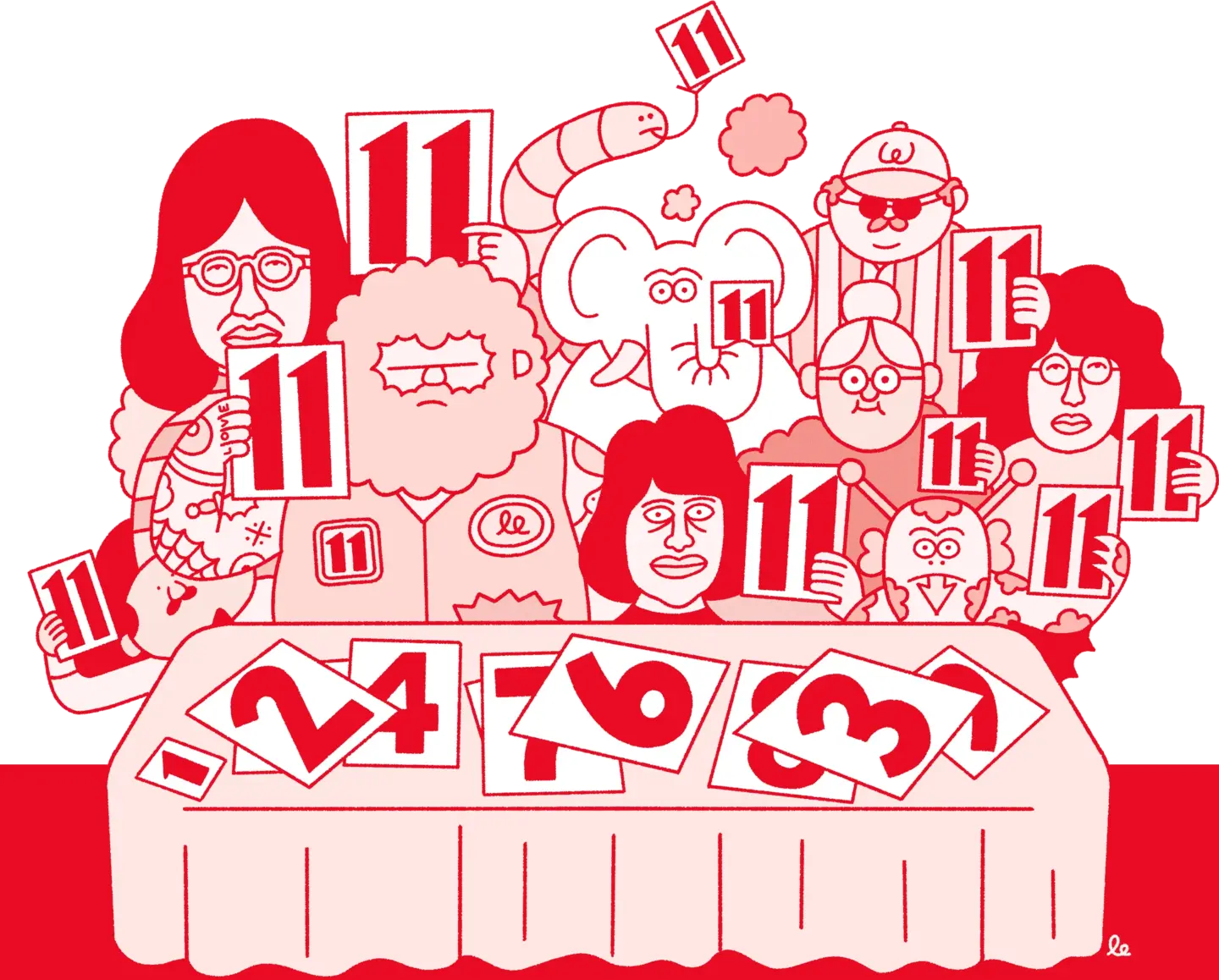
Your AI initiative arrives in this environment. It is unlikely to be initiative number one and may well be number 11, and it asks more of people than most earlier ones did because it changes how they do their jobs. Better technology does not solve this, and neither do more capable models. The solution is to accept that the energy required to create order has increased and build that into the plan from day one. The alternative is to discover it at month six, when adoption plateaus.
Catalysts
The most common move for organizations facing this problem is to bring in consultants to catalyze the process. I help many organizations in this way, so read what follows with the understanding that I have an interest.
Chemistry has a precise definition of a catalyst. A catalyst lowers a reaction’s activation energy without being consumed. The reactants still have to react, and the products still have to form. The catalyst supplies no energy of its own. It changes the pathway so that the reaction can proceed at a lower temperature.
This is a useful way to think about what happens when an outside consultant walks into a stuck organization. A consultant can ask questions people inside aren’t supposed to ask. That helps reopen processes nobody has been allowed to challenge and point the organization’s energy somewhere useful. The harder question is whether the reaction keeps running after the consultant leaves.
Much of this depends on how the relationship is structured. A consultant who does the work for you is not a catalyst. They are a temporary energy source, and when they leave, the organization returns to where it started. I have written about this pattern with forward-deployed engineers, or FDEs, the AI specialist vendors place inside client organizations to make their products work. They are very good at getting AI systems into production. MIT’s report found that pilots built with external partners reached deployment about twice as often as internal builds.
But an FDE who writes the integration, trains the team, and moves on to the next client has supplied energy for a single reaction. If the organization has not built the internal capacity to maintain and extend what the FDE built, the system begins degrading the moment they leave.
A true catalyst changes the pathway for good. In an organization, the pathway is the management system, meaning the metrics, incentives, and decision rights that determine how people are measured and rewarded. I saw what happens when you leave it untouched. An insurer brought in an AI system to handle routine claims automatically, but the claims handlers’ bonuses still rewarded how many claims each processed. The team resisted the system, and technology played little role. Their pay depended on a metric the AI had just made redundant. Testing a catalyst is simple. What is still running three months after the consultant has finished?
What this means for the smaller business
A large organization can absorb a failed AI pilot as a line item in a bad quarter. A small professional services firm that spends four months and a large share of its annual technology budget on a failed deployment has a different problem. The money is gone, and the team is now skeptical enough that the next attempt will be much harder.
A small firm’s advantage is that less needs to change. It has fewer layers between a decision and its consequences, and fewer people whose metrics need realigning. The disadvantage is that the energy budget is often the owner’s own attention, which is finite and already largely committed to running the business.
The practical advice is what MIT reported from large companies, at a smaller scale. Pick a single process. Then invest properly in the people who run it, through training, redesigned workflows, and new incentives. A software subscription alone buys none of that.
And decide, explicitly, which kind of change you are attempting. If the goal is 20% more efficiency in an existing process, the incremental approach works and the risk is manageable. If the goal is to change how the business operates, say so clearly to all employees. The people who work for you cannot aim at a target they have not been told exists. Ambiguity about the objective is the most expensive form of entropy a small firm can generate because it drains the owner’s attention, the firm’s only energy source, and produces nothing in return.
In organizations, order is a rate of expenditure, not a destination. Companies that appear orderly, with AI deployments that work, processes that adapt, and employees who trust the next initiative, haven’t solved a problem and finished. They spend energy continuously, and every week they import more than they use. As soon as they stop, entropy begins to increase again. Katz and Kahn described this principle 60 years ago. AI has not changed the physics.
Like this? Get email updates or grab the RSS feed like it’s 2008.
More from the blog
-

Workslop: worse but more
In November 1955, a naval historian named C. Northcote Parkinson opened a satirical essay in The Economist with a line that outlasted everything else he wrote. Work expands to fill the time available for its completion. His example was an elderly lady who spent an entire day posting a single card to her niece, a task a busy person would finish in three minutes on the way to lunch.Parkinson’s law now has a sequel, and it is worse. Work no longer expands to fill the time. It expands to fill the capacity. The effort of producing a thing used to carry an implicit question, namely, whether the thi…
-

Foomers vs doomers: skilled incompetence and the AI tug of war
foom-er, noun, an ironic malapropism playing on doomerism (AGI fatalists) and FOMO (hustle bros), used to describe techno-optimists. Reflects the onomatopoeic “slowly, then all at once” nature of exponential growth: “AI go foom.”A speaker at one of the many AI conferences that have sprung up like garments on your “clothes chair” (not clean, but not dirty enough to wash) describes the miracles of agent-assisted coding. Year-long rewrites finished in a fortnight, backlogs cleared, and hard problems dissolved by brilliant prompting and clever code harnesses. The audience of true believers laps i…
-

Forward Deployed Engineers: AI’s hired guns
The last mile of AI deployment is a real person, sitting in your office, learning your business, writing your plumbing, and making things work reliably. That will remain human for the foreseeable future.Google Trends shows a 5,000% increase in searches for “AI forward-deployed engineer” over the past five years. The curve stays flat from 2021 through mid-2024, then turns vertical. Indeed data reported by Business Insider shows postings for the role rising from 643 in April 2025 to 5,330 a year later, a 729% increase. LinkedIn’s own study found 42-fold growth between 2023 and 2025, making fo…
-

The sorting machine: recruitment’s race to the bottom
The sorting machine was built to cope with a genuine problem. Where it went wrong was in mistaking efficiency for effectiveness, in assuming that the ability to process resumes fast meant the ability to evaluate candidates well. The fix is not a smarter machine but a more modest one, paired with humans who are given the time, the tools, and the structured information to do what they were always better at.If you’ve been involved in any part of the recruitment process, the last 18 months have been dispiriting, to say the least. Hiring became a closed loop. Employers adopted applicant tracking…
-

Weighing smoke: why GEO dashboards are mostly useless
The promise of a tool that gives you similar search visibility to the pre-agent world is understandably seductive. But before you eagerly hand over your cash for a platform, consider whether an afternoon’s work a month might be a more cost-effective alternative.I recently wrote about the GEO chimera, the cottage industry promising to optimise your brand into AI answers. My argument was that the levers being sold mostly did not exist. Another part of the industry is selling gauges rather than levers. Estimates of the spend on AI visibility tracking now run past $100 million a year, across hu…