Zero busy work
By Garrett, : AI, Hot takes, Process
AI has given us a lot of things. When used incorrectly, your brain turns to mush. When used correctly, it frees you to be original, strategic and creative.
Something I’ve been thinking a lot about lately is the idea of zero busy work. This isn’t just about productivity, but about reclaiming human potential and a newfound ability to do more brain work and less hands work.
AI’s value isn’t in replacing human creativity, but in creating space for you to do what you actually do.
Here’s a simple concept to put this into practice:
- Map out any start to finish process and highlight the human steps where you can provide a more memorable, high value experience and result if you have more time to do it.
- Now take everything else and automate it with the use of AI-enabled technology. You’ll find that there are loads of legacy steps in your day to day work that are no longer relevant to you.
This is especially obvious with the boring and repetitive tasks nobody wants to do.
The goal is to double down on your unique value and let AI multiply your capacity. In the long run the human jobs don’t necessarily go away, but the outputs become more valuable.
This has been the same since the beginning of time.
In the beginning, if you wanted to build a house you started by making an axe and cutting down a tree, and so on. Over time, all those steps became entire industries and the hard parts became so common that you don’t even think about them anymore.
That’s what’s happening with AI. We used to make our own tools before we could build anything. Now we just buy what we need and focus on the building. AI is doing the same thing, but with thinking instead of hammering.
- An administrator can focus on building relationships and solving complex problems that require human judgment.
- A designer can focus on crafting user experiences and solving big design problems that require creative intuition.
- A project manager can focus on aligning stakeholders and navigating the human dynamics that make or break projects.
- A web developer can focus on architecting solutions and solving big technical challenges that require creative problem-solving.
Need help identifying what to automate in your business? Let’s chat about mapping your processes and finding the right opportunities.
Common questions
Won’t automation make my service feel less personal?
Not if you do it right. The goal is to automate the administrative tasks that clients don’t care about so you have more time for the work that requires your unique perspective and judgment.
What tools should I use for automation?
It depends on your specific workflows, but the principle is the same: find the repetitive tasks that don’t require human decision-making and let AI handle them. Start with one process and expand from there.
How do I know what to automate first?
Map your start-to-finish process. Identify where you provide the most value (strategy, creative problem-solving, relationship building). Everything else is a candidate for automation.
Like this? Get email updates or grab the RSS feed like it’s 2008.
More from the blog
-

Workslop: worse but more
In November 1955, a naval historian named C. Northcote Parkinson opened [a satirical essay in The Economist](https://en.wikipedia.org/wiki/Parkinson%27s_law) with a line that outlasted everything else he wrote. Work expands to fill the time available for its completion. His example was an elderly lady who spent an entire day posting a single card to her niece, a task a busy person would finish in three minutes on the way to lunch.Parkinson’s law now has a sequel, and it is worse. Work no longer expands to fill the time. It expands to fill the capacity. The effort of producing a thing used to …
-

Foomers vs doomers: skilled incompetence and the AI tug of war
foom-er, noun, an ironic malapropism playing on doomerism (AGI fatalists) and FOMO (hustle bros), used to describe techno-optimists. Reflects the onomatopoeic "slowly, then all at once" nature of exponential growth: “AI go foom.”A speaker at one of the many AI conferences that have sprung up like garments on your "clothes chair" (not clean, but not dirty enough to wash) describes the miracles of agent-assisted coding. Year-long rewrites finished in a fortnight, backlogs cleared, and hard problems dissolved by brilliant prompting and clever code harnesses. The audience of true believers laps i…
-

Forward Deployed Engineers: AI’s hired guns
> The last mile of AI deployment is a real person, sitting in your office, learning your business, writing your plumbing, and making things work reliably. That will remain human for the foreseeable future.Google Trends shows a 5,000% increase in searches for "AI forward-deployed engineer" over the past five years. The curve stays flat from 2021 through mid-2024, then turns vertical. [Indeed data reported by Business Insider](https://www.businessinsider.com/ai-forward-deployed-engineer-career-job-openings-tech-2026-5) shows postings for the role rising from 643 in April 2025 to 5,330 a year la…
-
The sorting machine: recruitment’s race to the bottom
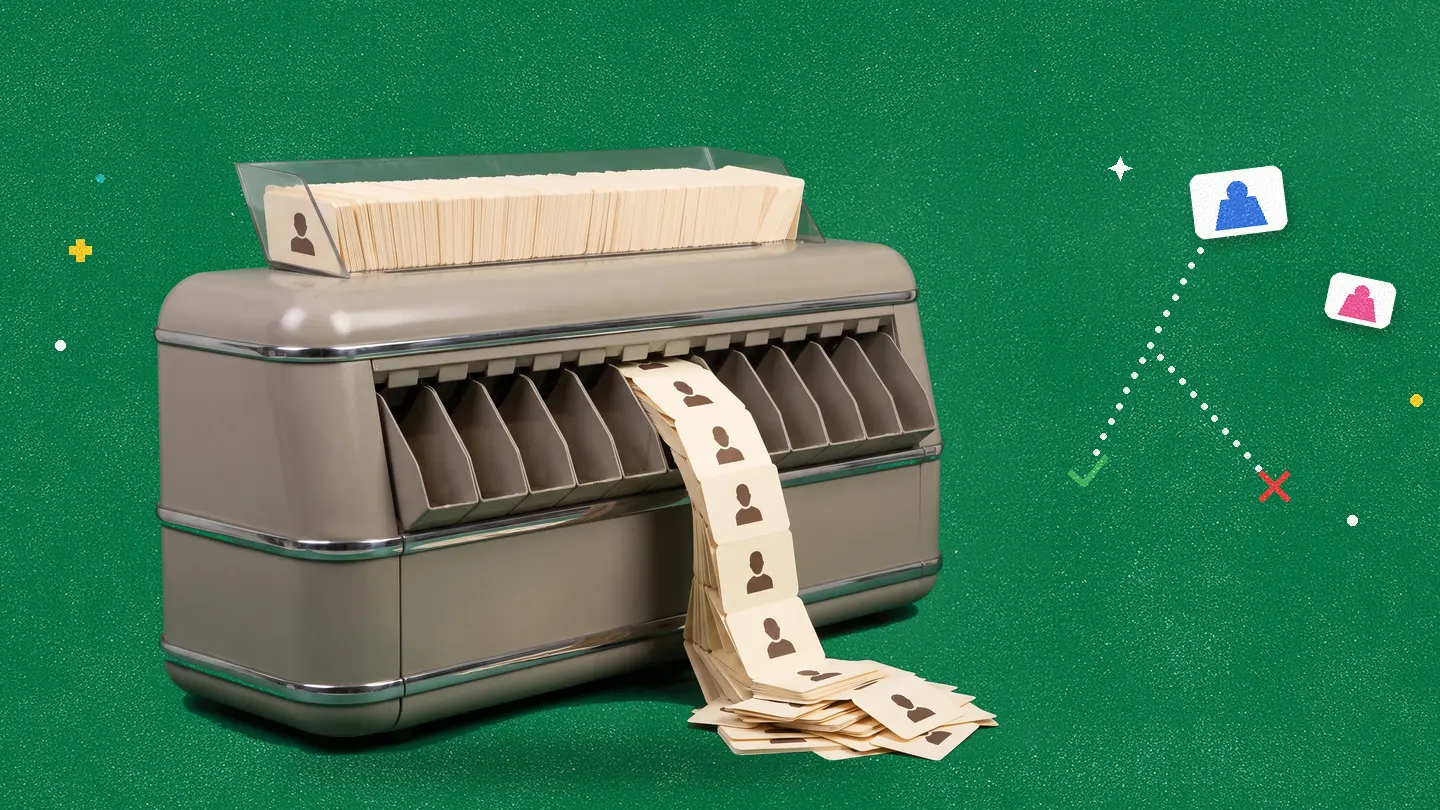
> The sorting machine was built to cope with a genuine problem. Where it went wrong was in mistaking efficiency for effectiveness, in assuming that the ability to process resumes fast meant the ability to evaluate candidates well. The fix is not a smarter machine but a more modest one, paired with humans who are given the time, the tools, and the structured information to do what they were always better at.If you've been involved in any part of the recruitment process, the last 18 months have been dispiriting, to say the least. Hiring became a closed loop. Employers adopted applicant tracking…
-

Weighing smoke: why GEO dashboards are mostly useless
> The promise of a tool that gives you similar search visibility to the pre-agent world is understandably seductive. But before you eagerly hand over your cash for a platform, consider whether an afternoon's work a month might be a more cost-effective alternative.I recently wrote about [the GEO chimera](https://betterthangood.xyz/blog/geo-practice-versus-snake-oil/), the cottage industry promising to optimise your brand into AI answers. My argument was that the levers being sold mostly did not exist. Another part of the industry is selling gauges rather than levers. Estimates of the spend on …